Project 01 / 11
Kitman Labs
Kitman Labs is a sports performance SAAS platform. Clients include the Premier League, IRFU, FA, NFL, NBA and MLS. I mainly work with Premier League soccer academies. I lead the user experience design on the products club staff use to plan training sessions, import performance or physical data and build data visualisations and dashboards.
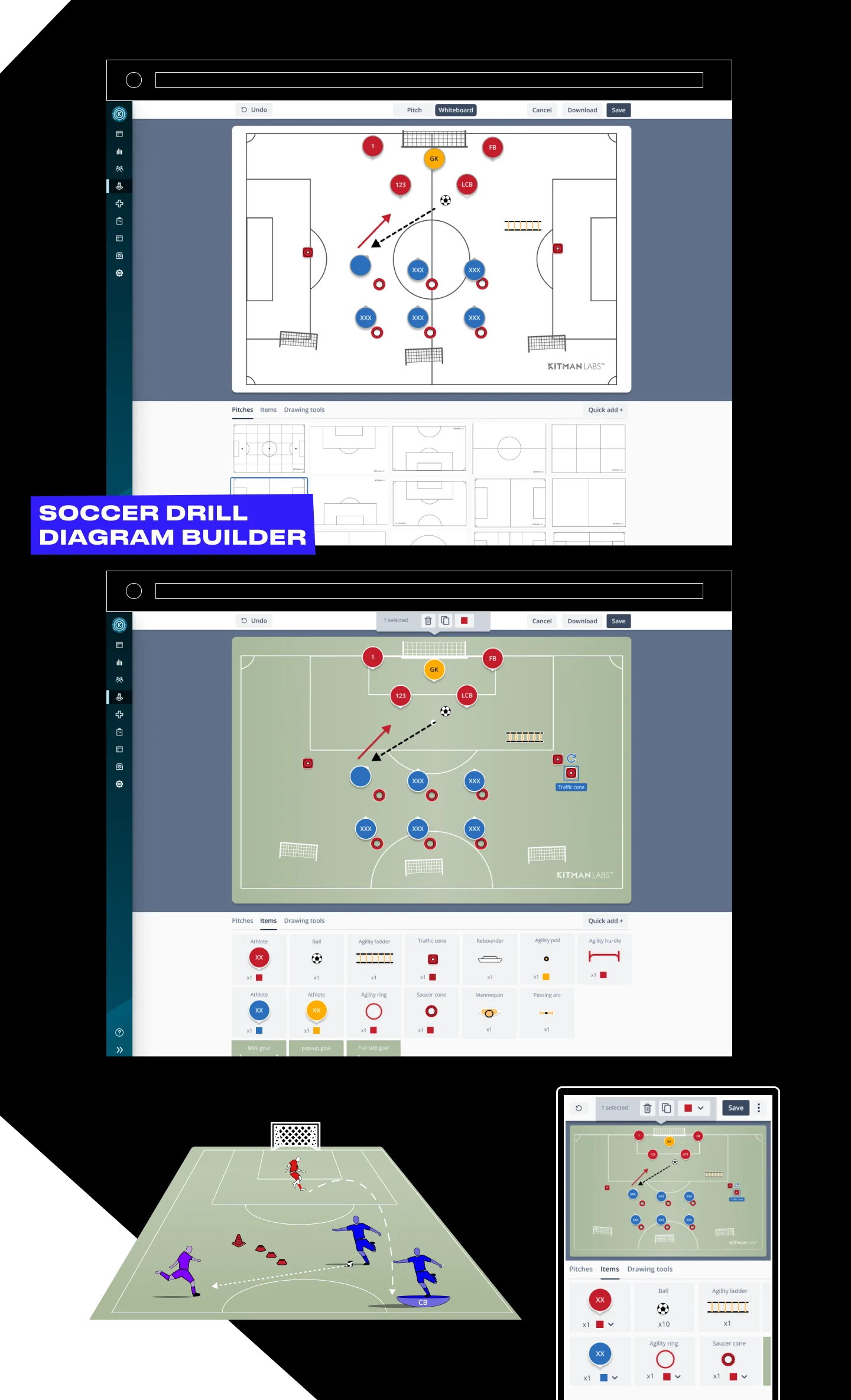
An area of the product where coaches can sketch out their training drills using an interactive diagram builder. The tool had to be responsive so it could be viewed and edited on the go. It had to be intuitive so it was easy to drag, drop and customise diagrams. We designed the product in a phased approach and intend on adding more features as we go.
The project involved lots of competitor analysis, user research interviews and usability testing.
I utilised AI coding to build a high fidelity working prototype with all features: Launch prototype…
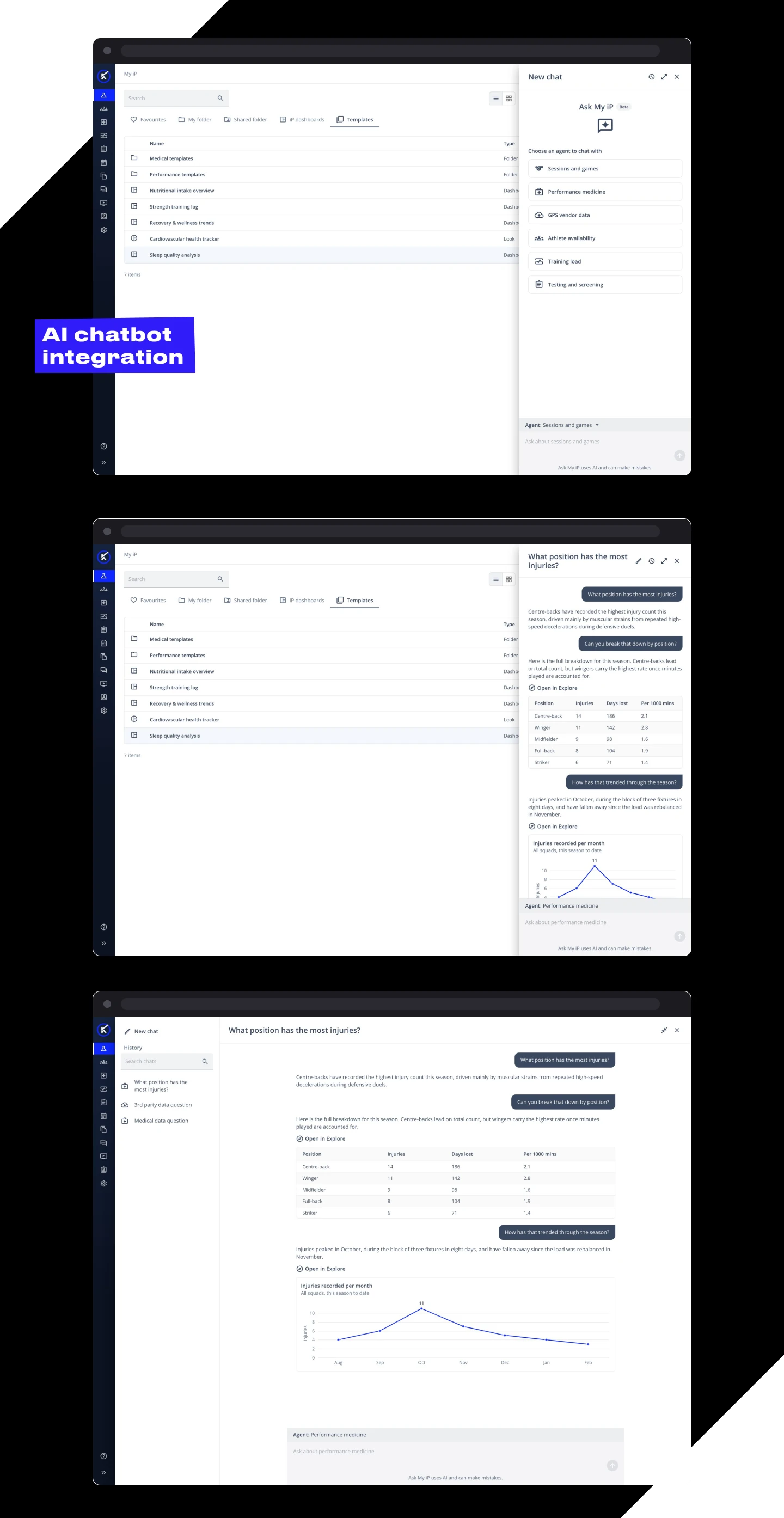
Ask my iP is an AI assistant built into iP: Intelligence Platform. Staff choose an agent for the area they are asking about, such as performance medicine, training load or athlete availability, then ask the question in plain language. Answers come back as text, tables and charts, and anything worth keeping can be opened in Explore and built on.
The assistant sits in a panel beside whatever the user is already working on, and expands to full width when an answer needs the room. I designed the agent picker, the waiting and alert states for answers that take time to come back, and the handover from an answer into the rest of the product. It is now in beta with clubs.
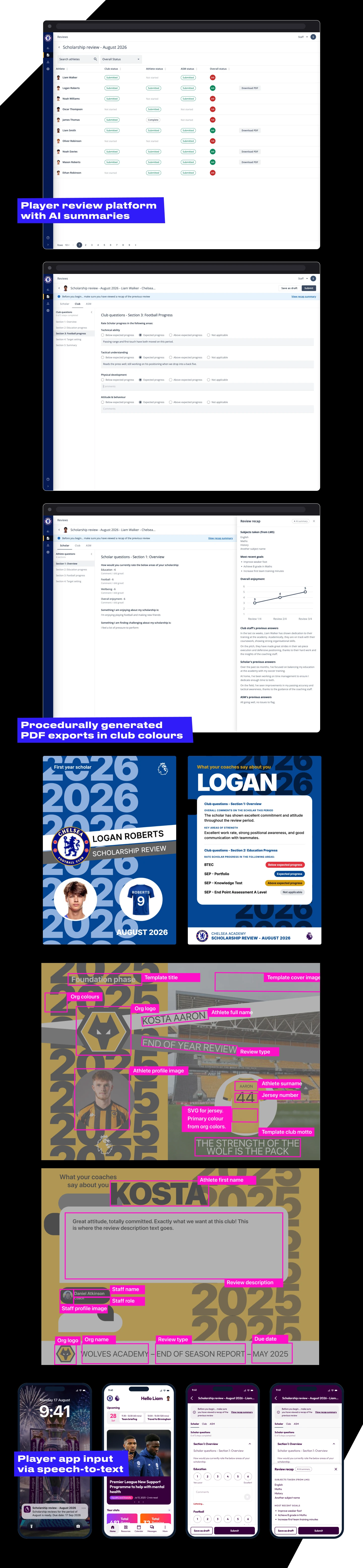
A review platform for Premier League academy scholarships. Each review is filled in by three parties, the scholar, the club and the academy support manager, and club staff can see at a glance who has completed what and what is still outstanding.
Before writing anything, staff can open an AI summary of the previous review beside the form, so the scholar’s own ratings, goals and answers are there while the club writes its own. The finished review is exported as a PDF generated in each club’s colours and crest.
That export is procedurally generated rather than designed club by club. Every slot in the template is mapped to a source: the organisation’s colours, logo, name and motto, the athlete’s full name, profile image and squad number, the review type and due date, and the written review with the staff member who gave it. The jersey is drawn as an SVG that takes its primary colour from the organisation’s palette, so a club that has never been set up still gets a correctly branded report with no new artwork.
Scholars answer on their phone in the player app. They are prompted by push notification, rate each area of their scholarship and can speak their comments rather than type them.
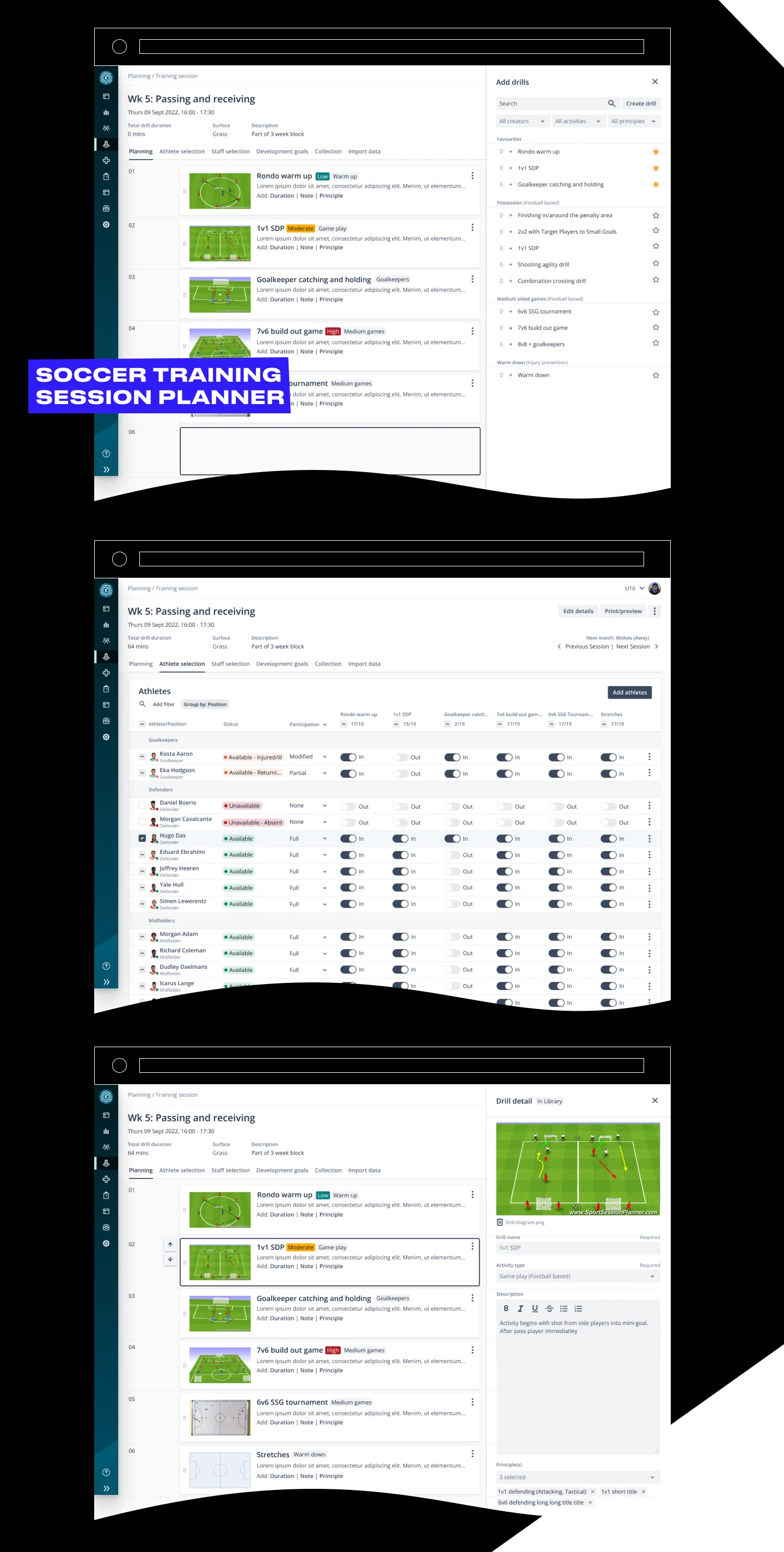
A training session planning product, where coaches can add drills, coaching notes and mark player and staff attendance.
Sports scientists can also contribute by setting workload targets and planning workload for the gameweek, day and session. I built an AI coded prototype to bring this complex workflow to life, user test it and sell the business case. Launch prototype…
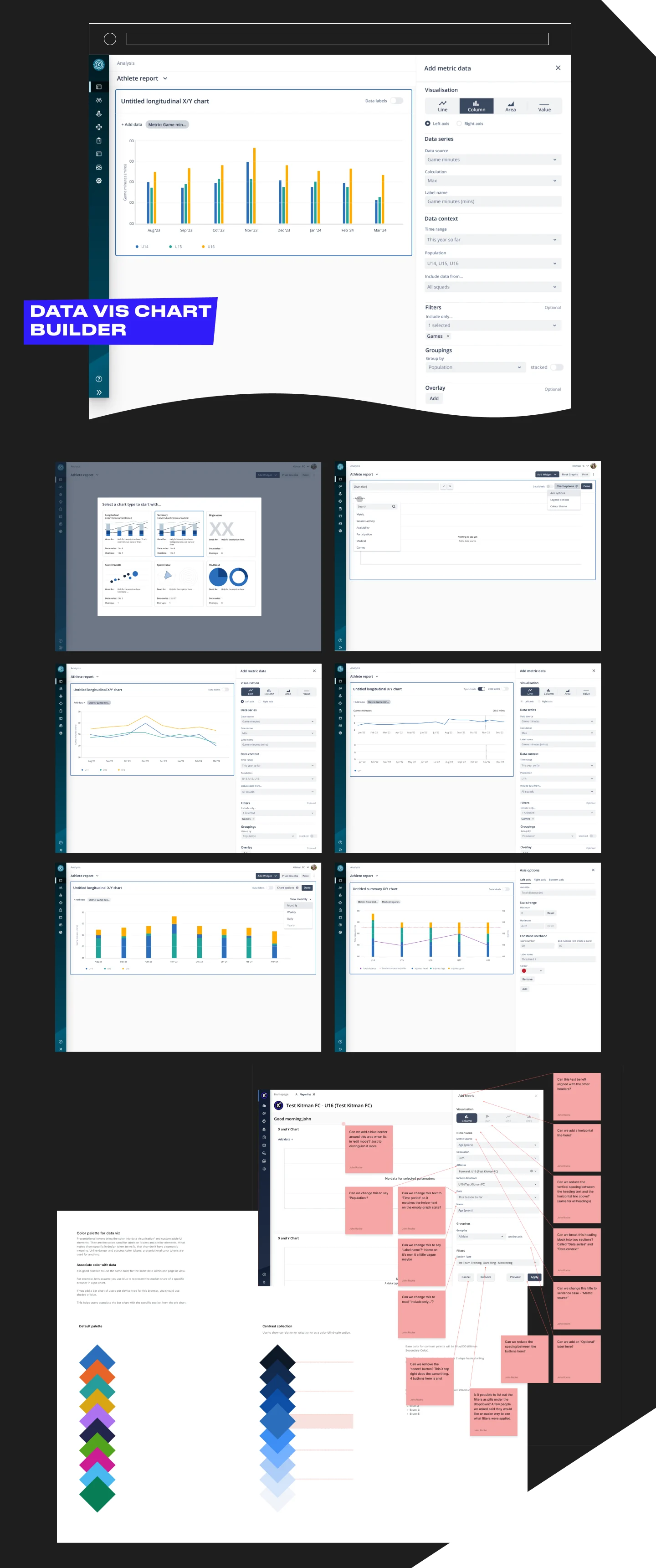
Visualising performance data is at the heart of what Kitman Labs does. I worked on redesigning and streamlining the chart and graph building process.
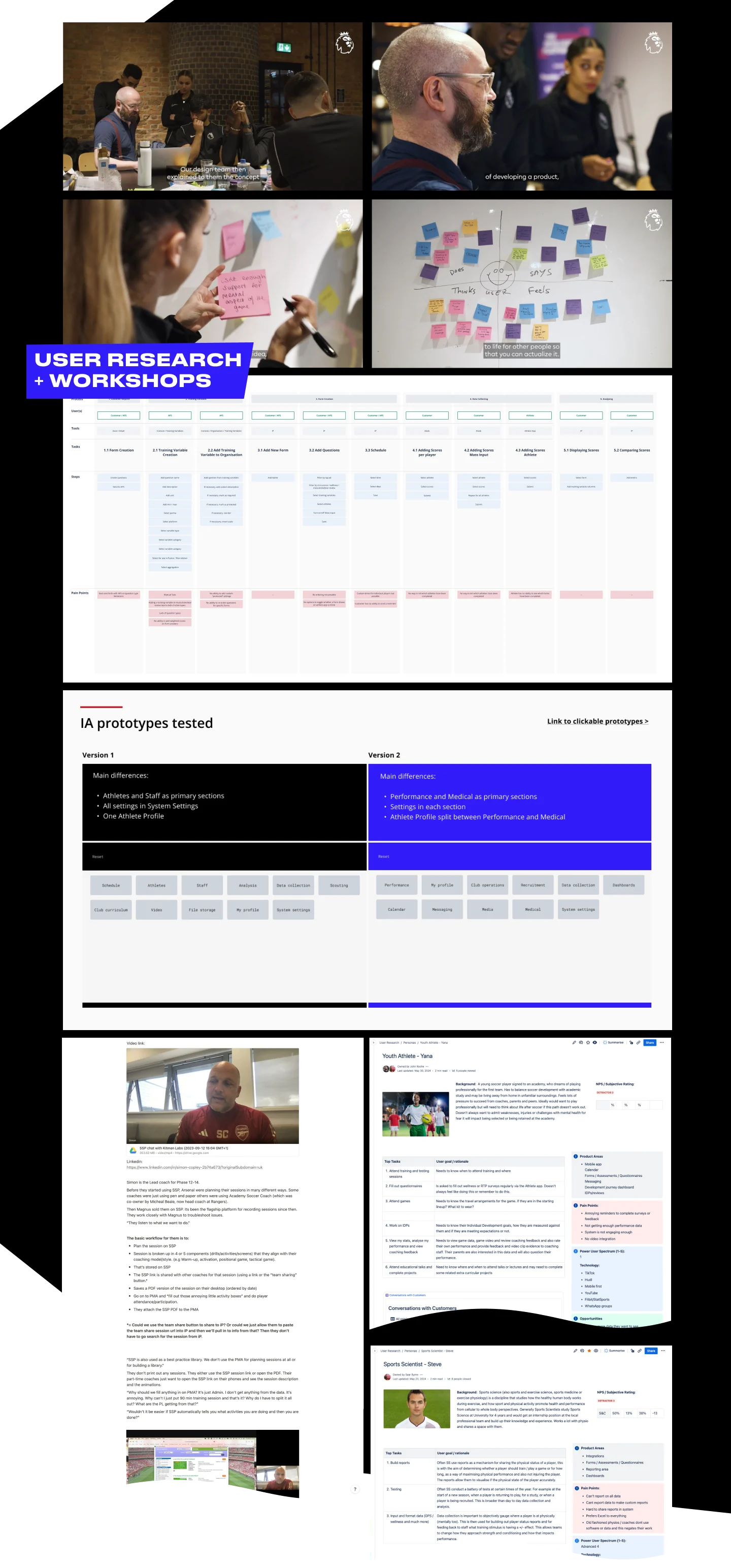
Most projects at Kitman Labs involve gathering evidence and doing lots of user research to help inform design and product decisions. I regularly conduct customer interviews, build low and hi fidelity prototypes, run workshops, update customer personas and create customer journey maps.
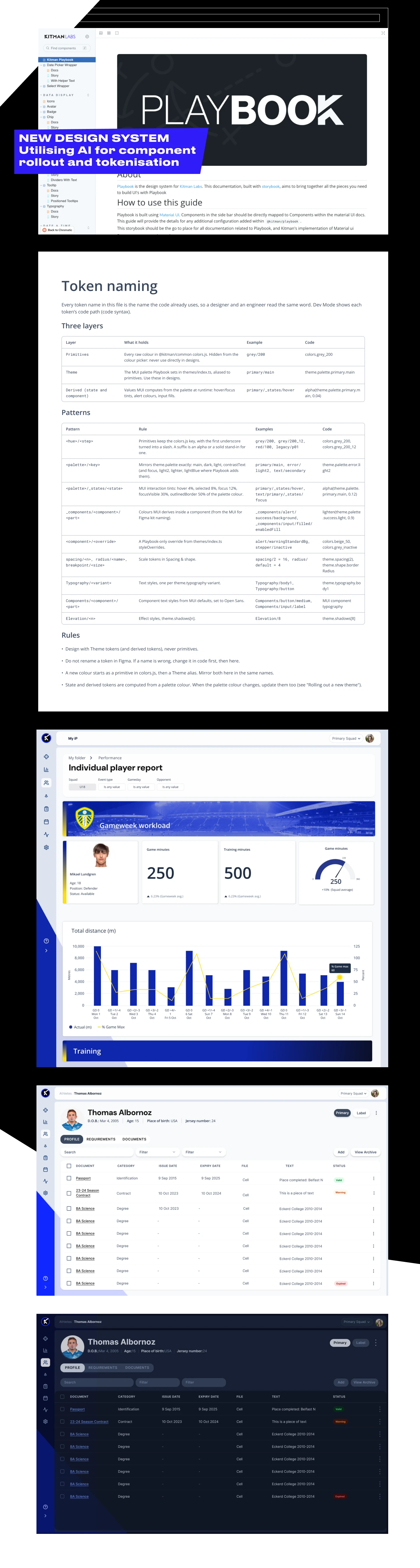
Myself and the rest of our design team worked closely with the Front-End engineering team to roll out a new design system using Material UI and Storybook. We defined rules around components, layout examples and usage guidance so engineers, designers and product managers can all plan, design and build consistent experiences.
I utilised AI to help with the rollout: applying the system across every component, adding a new theme to Storybook and to the prototyping kit, and tokenising it, so the values sit in one place instead of being repeated component by component.